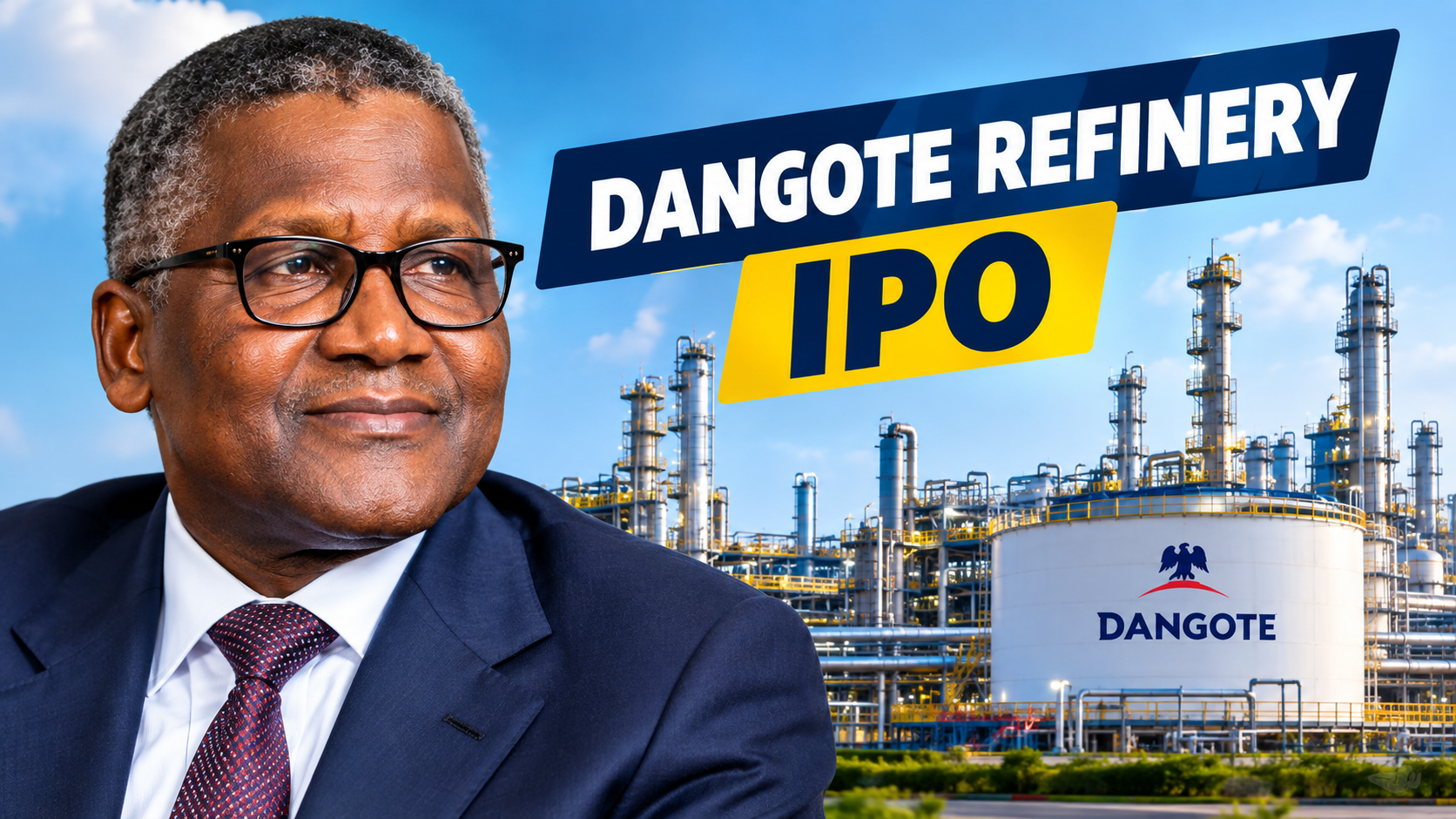
Nigerian billionaire Aliko Dangote has formally launched the public offering of shares in his Lagos-based oil refinery, describing the transaction as a “people’s IPO” designed to give ordinary Nigerians and other eligible African investors an opportunity to own part of one of the continent’s most important industrial projects.
The offer opened on September 14, 2026, following a gong-ringing ceremony at the Nigerian Exchange in Lagos. The transaction involves 4.1 billion ordinary shares priced at ₦525 each, with a minimum subscription of 10 shares, worth ₦5,250 before applicable charges. If fully subscribed, the offer is expected to raise approximately ₦2.15 trillion, or about $1.6 billion. Punch and Reuters
The offer is scheduled to close on October 13, 2026, subject to the terms contained in the prospectus. The refinery’s official IPO website lists the same offer period and explains that subscriptions are processed through approved receiving agents and electronic application channels, not directly through the information website. Dangote Refinery IPO Portal
The launch marks a major change in the ownership story of the refinery. Built as a privately controlled industrial project, the facility is now being opened to public investors through the Nigerian capital market. Punch reported that it is the first petroleum refinery to be offered to investors on the Nigerian stock market in the Nigerian Exchange’s 66-year history. Punch
Dangote has repeatedly framed the offer as an attempt to broaden access to investment opportunities that have traditionally been dominated by wealthy individuals, institutions and professional investors. He has said that drivers, traders, cooks, domestic workers, managers and other ordinary members of the public should have the opportunity to own shares in the refinery.
Aliko Dangote also reaffirmed his commitment to making the ongoing Initial Public Offering (IPO) of Dangote Petroleum Refinery and Petrochemicals a truly “People’s IPO”, assuring retail and small investors that they will receive priority allocation in the event of oversubscription.
He also indicated that he may offer additional shares in Refinery to the public if the ongoing IPO attracts more demand than the present offer could accommodate. Dangote said the offer was deliberately structured to broaden ownership of one of Africa’s most strategic industrial assets and give millions of Nigerians an opportunity to participate directly in the refinery’s growth and future value creation.
In a recent interview, Dangote said the company’s ambition was to attract about 10 million shareholders from Nigeria and across Africa. He described the plan as an effort to “democratise the capital market” by bringing small investors into the ownership of a major industrial enterprise. Vanguard
The offer’s relatively low entry point is central to that message. At ₦525 per share, an investor does not need millions of naira to apply. The minimum subscription of 10 shares allows eligible investors to participate with ₦5,250, although transaction charges and other applicable costs may increase the final amount payable.
That minimum, however, should not be confused with a promise that every applicant will receive all the shares requested. If the IPO attracts more applications than the number of shares available, allocation may be adjusted under the terms of the prospectus.




Dangote has reportedly assured retail and small investors that they will receive priority consideration if the offer is oversubscribed. He also indicated that additional shares could potentially be made available if demand exceeds the current offer. The Guardian
The emphasis on small investors is significant because the refinery is being offered at a valuation that places it among the largest corporate offerings ever seen in Africa. Reuters reported that the IPO values the refinery at approximately $49 billion, while the public offer is intended to sell a minority stake of about 3%. Dangote is expected to retain control of the business after the offer. Reuters and Associated Press
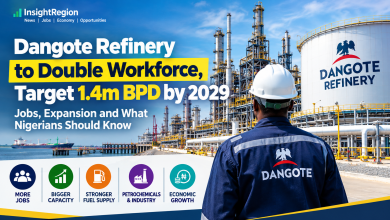
The company’s decision to go public is not simply about allowing people to buy shares. The funds raised are expected to support the refinery’s expansion programme and related growth capital expenditure. The facility currently has a stated processing capacity of approximately 700,000 barrels of crude oil per day, while the company plans to increase capacity toward 1.4 million barrels per day.
The proposed expansion could strengthen the refinery’s position in the global petroleum market and help Nigeria move further away from dependence on imported refined products. The refinery began operations in 2024 and has already become a major supplier of petrol, diesel, aviation fuel and other petroleum products to Nigeria and international markets.
Reuters reported that the refinery recorded revenue of more than $13 billion and a net profit of approximately $1.82 billion in the first half of 2026, compared with a reported loss of $476 million for the whole of 2025. The sharp improvement reflects stronger operating performance and favourable international refining conditions, although such results should not be treated as a guarantee of future profits. Reuters
The refinery’s international importance has also increased because of disruptions in global energy supply. Reuters reported that Dangote supplied significant volumes of jet fuel and diesel to Europe during a period of tighter global fuel availability. Its ability to process several crude grades and export refined products has given the facility a role beyond Nigeria’s domestic fuel market. Reuters
For Nigeria, the refinery represents more than a private business. It is connected to longstanding concerns about fuel imports, foreign-exchange pressure, energy security, industrial development and the country’s ability to process its own crude oil.
Before the refinery became operational, Nigeria depended heavily on imported refined petroleum products despite being a major crude-oil producer. A large domestic refinery capable of supplying petrol, diesel, aviation fuel and petrochemical products could reduce import requirements and improve the country’s position in regional energy trade.
However, the benefits will depend on how consistently the refinery operates, how much crude it can obtain, the cost of production, domestic demand, export opportunities and government policy. Reuters has previously reported that crude supply and cost remain important risks, with the refinery importing some of its crude at certain periods. Reuters
The IPO therefore presents two different stories at the same time. For Dangote, it is a way to raise capital for expansion and potentially unlock value from a major asset. For Nigerians, it is being presented as a chance to participate in the ownership of a business that has national and international significance.
The public offer may also deepen Nigeria’s investment culture. Many Nigerians are familiar with banks, savings products, property and informal businesses, but fewer participate directly in the stock market. A highly visible company such as Dangote Refinery could introduce new investors to shares, dividends, allotment procedures, market risk and long-term ownership.
The IPO website explains that shareholders may become eligible to receive dividends if and when dividends are declared. It also makes clear that dividends are not guaranteed and will depend on the company’s performance, cash requirements and decisions of its board. Share prices may also rise or fall after listing, meaning investors could lose some or all of the money invested.
This warning is important because the popularity of Dangote and the size of the refinery may encourage some investors to assume that the shares are automatically safe or certain to rise. A well-known company can still face business difficulties, regulatory changes, foreign-exchange pressures, rising costs, competition and delays in expansion.
There are also questions around valuation. Reuters Breakingviews reported that the proposed valuation appears demanding when compared with some international refining companies, with the IPO’s attractiveness depending partly on the future value of expanded capacity and continued favourable refining conditions. Reuters Breakingviews
In practical terms, the ₦525 price alone cannot tell investors whether the shares are cheap or expensive. Investors need to examine the company’s earnings, debt, cash flow, assets, expansion requirements, dividend policy and the valuation implied by the total number of shares.
Another important issue is access. The company has listed approved banks, fintech platforms, mobile-money operators and electronic application channels through which eligible investors can subscribe. The official process includes entering a BVN, selecting the number of shares and making payment through an approved channel. Dangote IPO Subscription Portal
The Securities and Exchange Commission has previously warned investors about fake Dangote IPO promotions, including requests to create accounts, pre-fund wallets, secure guaranteed allocations or pay unofficial agents. Investors have been advised to rely on formal announcements, approved channels and the official prospectus rather than social-media messages or private payment requests.
The distinction between applying and receiving shares is also important. The official IPO information explains that applications are processed after the offer closes, after which shares are allotted according to the offer terms. Only investors who receive an allotment become shareholders through the approved process. Dangote Refinery IPO Portal
The launch has already generated strong interest among retail investors. Reports from the Nigerian Exchange and local media described a rush of applications and heavy attention from individuals seeking to buy into the refinery. That enthusiasm reflects both the public profile of Dangote and the attraction of owning a stake in a project associated with Nigeria’s industrial future. Punch
Still, the “people’s IPO” slogan will ultimately be judged by how widely ownership is distributed, how many small investors receive shares and whether those investors understand the risks involved.
The offer is not a donation, government grant or guaranteed income scheme. It is a share investment. Investors may benefit if the company grows and the share price appreciates, but they may also experience losses if business performance or market conditions deteriorate.
For ordinary Nigerians, the most important benefit may be the chance to enter the formal capital market with a relatively small amount. For the wider economy, the transaction could help mobilise domestic savings, broaden share ownership and demonstrate whether a major African industrial company can raise substantial capital from everyday investors.
For Dangote, the IPO could provide the funds required to expand refining capacity, strengthen exports and support a wider industrial strategy. The company has also discussed broader ambitions involving additional energy and manufacturing investments across Africa.
The success of the transaction will therefore depend on more than the amount raised on the first day. It will also depend on the refinery’s long-term performance, the quality of its governance, the treatment of minority shareholders, the delivery of its expansion plans and the confidence investors place in Nigeria’s capital market.
As the offer remains open until October 13, eligible investors should study the prospectus, confirm the final terms and use only approved subscription channels. The official information portal is ipo.dangote.com .
The Dangote Refinery IPO may be historic because it opens public ownership of Africa’s largest refinery to a much wider audience. But its lasting importance will be determined by whether it turns that access into informed, broad-based and sustainable participation in one of Nigeria’s most ambitious industrial ventures.
This article is for information and education only. It is not financial advice. Investment decisions should be based on the official prospectus, verified regulatory information and each investor’s personal financial circumstances.