Dangote Refinery IPO: Nigerians Can Buy Shares for ₦5,250 as ‘IPO for the People’ Opens New Chapter

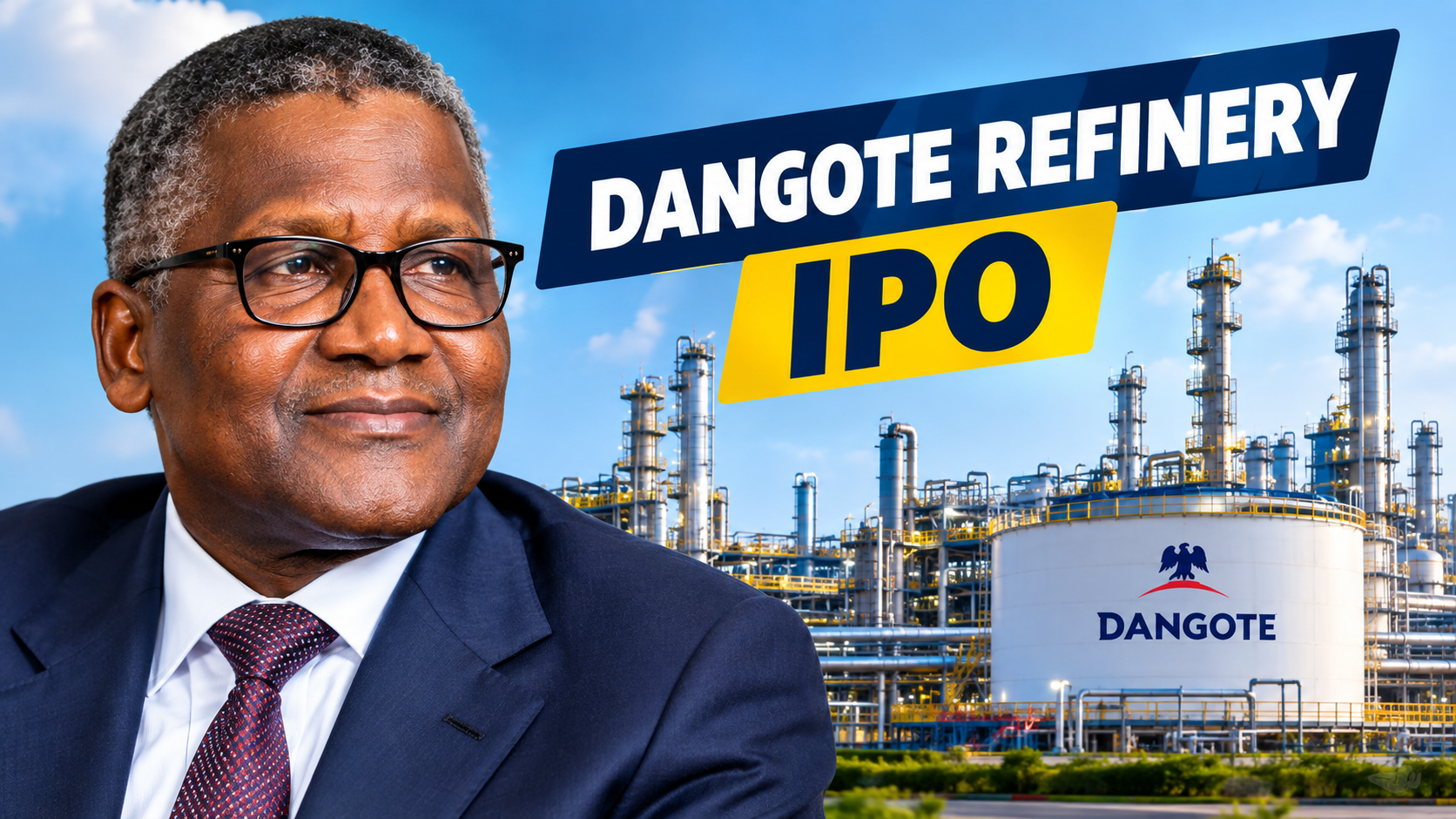
Aliko Dangote has described the proposed Dangote Refinery IPO as an “IPO for the people”, opening the door for ordinary Nigerians to potentially become shareholders in one of Africa’s biggest industrial projects.
The planned public offer of shares in Dangote Petroleum Refinery and Petrochemicals FZE is moving the massive Lekki-based refinery into a new phase — from a privately controlled industrial project to an asset in which members of the public can seek an ownership stake.
At the centre of the offer are 4.1 billion ordinary shares priced at ₦525 each, with a minimum subscription of 10 shares, costing ₦5,250.
Dangote said the objective goes beyond raising money for the refinery’s ambitious expansion plans. He wants workers, traders and other ordinary people to have the opportunity to own part of the business.
The announcement was made in Lagos on Monday, September 7, 2026, when Dangote signed the registration documents for the proposed Initial Public Offering.
“This is why we have actually called it the IPO for the people,” Dangote said, describing the transaction as an effort to democratise ownership of the refinery.
The proposed offer is expected to raise about ₦2.15 trillion, or roughly $1.6 billion, according to current reports and the offer documents. Reuters reports that the funds are intended to support a major expansion that would eventually take the refinery’s processing capacity from around 700,000 barrels per day to 1.4 million barrels per day.
For Nigerians who have watched the refinery’s development from its construction years to its emergence as a major fuel supplier, the IPO represents something new: the opportunity to move from being customers of the refinery’s products to potentially becoming shareholders in the company.
What is happening with the Dangote Refinery IPO?
The Dangote Petroleum Refinery and Petrochemicals FZE is preparing to offer shares to eligible investors through a public offering.



The announced terms include:
| IPO detail | Current information |
| Company | Dangote Petroleum Refinery and Petrochemicals FZE |
| Shares on offer | 4.1 billion ordinary shares |
| Offer price | ₦525 per share |
| Minimum subscription | 10 shares |
| Minimum investment | ₦5,250 |
| Expected proceeds | About ₦2.15 trillion |
| Main purpose | Expansion and growth |
| Target capacity | Up to 1.4 million barrels per day |
| Investor focus | Including retail investors |
The Securities and Exchange Commission has approved the offering, with Reuters describing it as potentially Africa’s largest-ever share sale.
However, investors should pay attention to one important detail concerning the timetable. Recent reports have stated that the offer is expected to open on September 14 and close on October 13, 2026.
At the same time, the official Dangote IPO website currently displays the opening and closing dates as “to be confirmed.” It also states that subscriptions are not yet open and that investors should use only approved subscription channels listed on the official website.
That means prospective investors should verify the final opening date directly through the official IPO portal before submitting money or personal information.
Why Dangote is calling it an “IPO for the people”
The most significant part of Dangote’s announcement may not be the ₦2.15 trillion fundraising target. It is the emphasis on who gets the opportunity to own the shares.
Dangote specifically mentioned drivers, cooks, traders, domestic staff, managers and other workers when explaining the thinking behind the offer.
His argument is simple: ownership of a major industrial asset should not be limited to wealthy investors and large institutions.
The public offer is intended to allow eligible ordinary investors to participate alongside larger investors, subject to the terms of the offer and eventual allotment.
The official IPO website similarly describes the public offer as an opportunity for eligible investors to apply for shares and become shareholders if shares are allotted to them.
That last part is important.
Applying for shares does not automatically mean receiving all the shares requested. The official IPO portal specifically warns that submitting an application does not guarantee allotment.
How much does it cost to become a Dangote Refinery investor?
The minimum subscription is 10 shares. At ₦525 per share, that means an investor can apply for shares worth: 10 × ₦525 = ₦5,250. That relatively low entry point is central to the “IPO for the people” message.
For perspective:
- 10 shares = ₦5,250
- 20 shares = ₦10,500
- 50 shares = ₦26,250
- 100 shares = ₦52,500
- 500 shares = ₦262,500
- 1,000 shares = ₦525,000
These calculations represent the value of the shares at the announced offer price before considering any applicable charges or the final terms of subscription. But prospective investors should not interpret the low minimum investment as an indication that the shares are risk-free.
The official IPO website warns that investing in shares carries risk and that the value of an investment can rise or fall. Investors may also receive less than the amount they invested if the market value falls.
What will the IPO money be used for?
The public offering comes as Dangote prepares for another major expansion of the refinery. The facility currently has refining capacity of around 700,000 barrels per day, making it Africa’s largest refinery.
The expansion plan is designed to take that capacity to approximately 1.4 million barrels per day by 2029, according to Reuters. The expansion has been put at about $14.3 billion.
That would place the refinery among the world’s largest refining facilities.
The IPO therefore has two connected dimensions.
- The first is capital raising.
- The second is ownership expansion.
The company can raise substantial capital while opening its shareholder base to a much wider group of investors. For Nigeria, the development is also significant because the refinery is no longer simply a construction project. It is now an operating industrial facility with a growing role in the country’s petroleum market.
From mega-project to public investment opportunity
The Dangote Refinery has taken years to reach this point. Dangote recalled at Monday’s signing ceremony that the project faced significant challenges even before construction began, including difficulties finding suitable land.
He said the company spent several years searching for a location, including more than three years at Olokola before eventually moving to the Lekki Free Zone.
The refinery was ultimately built at an estimated cost of about $20 billion and began operations in 2024. Reuters reports that the facility has since become an important part of Nigeria’s fuel market.
Its transition into the public market therefore marks another major stage in the project’s history. What began as one of Nigeria’s most ambitious private industrial investments is now being presented as an opportunity for wider participation through the capital market.
Why the refinery matters beyond the IPO
The Dangote Refinery is much more than another company seeking investors. Its size means developments at the facility can affect Nigeria’s broader energy and economic landscape.
The refinery has the potential to contribute to:
- greater domestic refining capacity;
- reduced dependence on imported refined petroleum products;
- increased supply of refined products to the Nigerian market;
- petroleum-product exports to other African markets;
- foreign-exchange earnings;
- industrial development;
- employment and supporting businesses; and
- Nigeria’s wider energy-security ambitions.
- The refinery’s expansion could further increase its importance.
Reuters reports that the company expects to double its current capacity to 1.4 million barrels per day, while the wider Dangote Group is also pursuing industrial projects elsewhere in Africa.
But the significance of the IPO should not be confused with a guarantee that every Nigerian will benefit financially. The refinery may become more important to Nigeria’s economy, but individual investors will still face the normal risks associated with owning shares.
Dangote talks about potential dollar dividends
Another part of Dangote’s remarks that is likely to attract investors is his reference to potential dollar-denominated dividends.
He painted a future scenario in which shareholders could receive dollar dividends that could potentially be used for expenses such as overseas school fees. That possibility may sound particularly attractive to Nigerians concerned about the naira’s purchasing power.
However, investors should make an important distinction.
A statement about potential future dividends is not the same thing as a guaranteed dividend.
Dividends depend on the company’s financial performance, distributable profits, board decisions and applicable corporate and regulatory requirements.
Therefore, prospective investors should not subscribe on the assumption that they are guaranteed regular dollar payments. The final prospectus and subsequent company disclosures will be more important in determining the actual dividend framework.
What could ordinary Nigerians gain from owning the shares?
If successful, the IPO could give ordinary Nigerians exposure to the financial performance of a major Nigerian industrial business.
Potential benefits could include dividend income, if dividends are declared, and capital appreciation, if the market value of the shares rises after listing.
There is also a broader benefit. Owning shares allows an investor to participate in the growth of a business rather than simply consuming its products.
For example, someone who buys 10 shares for ₦5,250 would not own a refinery physically or have a claim to a specific quantity of petrol.
Instead, if the shares are allotted, that person becomes a shareholder in the company. The value of that ownership can subsequently rise or fall depending on the company’s performance and market conditions.
That distinction is particularly important for first-time investors.
The opportunity also comes with risks
The excitement around the Dangote Refinery IPO should not hide the fact that this is an investment in a business. Businesses can perform well, but they can also face setbacks.
Among the issues investors may need to watch are:
- Crude oil supply – A large refinery needs reliable access to crude feedstock.
- Refining margins – The profitability of refining petroleum products can change with global oil and product prices.
- Currency movements – Nigeria’s exchange-rate environment can affect costs, revenues and investor returns.
- Expansion risk – The planned expansion is enormous and will require substantial capital, execution and infrastructure.
- Regulatory risk – Changes in energy policies, taxes, regulations and market rules can affect the business.
- Market valuation – A high-quality company can still be an expensive investment if investors pay too much for its shares.
Reuters has noted that analysts are examining the refinery’s valuation relative to international refining companies, even as the business benefits from strong market conditions.
The refinery reported a $1.82 billion profit in the first half of 2026, a major turnaround from a reported $476 million loss in the corresponding period of 2025.
That improvement is significant, but investors should still examine the company’s financial statements, valuation and risk factors before making an investment decision.
The IPO is not the same as guaranteed wealth
For many Nigerians, the ₦5,250 minimum may make the offer look accessible. But accessibility should not be confused with certainty.
Buying shares does not guarantee:
- a profit;
- a dividend;
- a rise in the share price;
- a particular level of future income; or
- recovery of the original investment.
The official Dangote IPO website explicitly warns that the value of shares can fall as well as rise. Investors should therefore treat the IPO as an investment decision, not as a guaranteed opportunity to make money.
Nigerians should also watch out for IPO scams
The public interest surrounding the Dangote IPO is likely to attract fraudsters. This is already an important concern.
Investors should be extremely careful about social-media messages, WhatsApp groups, fake investment websites and individuals claiming to represent the refinery or its advisers.
The official Dangote IPO website says subscriptions should only be made through approved channels listed on the official website. It also warns investors to never share your PIN, password or OTP.
The official portal further advises investors to keep their BVN and bank information secure and ensure that their details match across their records.
This is particularly important because the low minimum subscription could encourage large numbers of first-time investors to participate.
What happens next?
The immediate next step is the opening of the public offer.
Current reports say the subscription is expected to run from September 14 to October 13, 2026, although the official IPO website currently lists the dates as yet to be confirmed. Investors should therefore verify the final timetable through the official IPO portal before applying.
Once the offer opens, eligible investors will be able to apply through approved channels.
The official process currently provides for investors to verify their identity using their BVN, select the number of shares they want and make payment through an approved subscription channel. After the offer closes, applications will be processed and shares allotted according to the final terms.
Investors should remember that subscription confirmation is not the same as allotment.
A new chapter for Dangote Refinery — and Nigerian investors
The Dangote Refinery IPO is significant because it brings together two stories that have largely existed separately. One is the story of Nigeria’s attempt to build large-scale domestic industrial capacity. The other is the story of ordinary Nigerians participating in the capital market.
Dangote’s message is that the refinery should not simply be viewed as a huge industrial facility owned by a small group of people.
He wants it to become an asset in which a much broader community of investors can participate.
Whether the IPO ultimately becomes a landmark example of mass investment participation will depend on how Nigerians respond, how the company performs, how the shares trade and whether the refinery successfully delivers its ambitious expansion plans.
But one thing is already clear.
The Dangote Refinery is entering a new phase.
After years of construction, huge capital expenditure, operational challenges and the transformation of Nigeria’s refining landscape, the project is now moving toward the public capital market.
And with a minimum subscription of 10 shares at ₦525 each, the barrier to entry has been deliberately set at a level that allows ordinary investors to consider participating.
For Nigerians, the bigger question is no longer simply whether Dangote Refinery can become one of the world’s largest refineries.
It is whether ordinary citizens can become part of its next chapter as shareholders — and whether they fully understand the opportunity and the risks before putting their money into it.
What Nigerians should do now
Anyone considering the Dangote Refinery IPO should first read the official prospectus, confirm the final offer dates, understand the risks and use only approved subscription channels.
The official IPO portal currently provides the latest offer information and warns investors to subscribe only through approved channels.
Do not send money to individuals promising guaranteed allocation, and do not share your PIN, password or OTP with anyone claiming to be assisting with the IPO.
InsightRegion will continue to follow the Dangote Refinery IPO and provide updates as the offer opens, including what the investment means for ordinary Nigerians and how eligible investors can apply safely.