Bringing Back Fuel Subsidy in Nigeria: Relief for Nigerians or Another Trillion-Naira Burden?

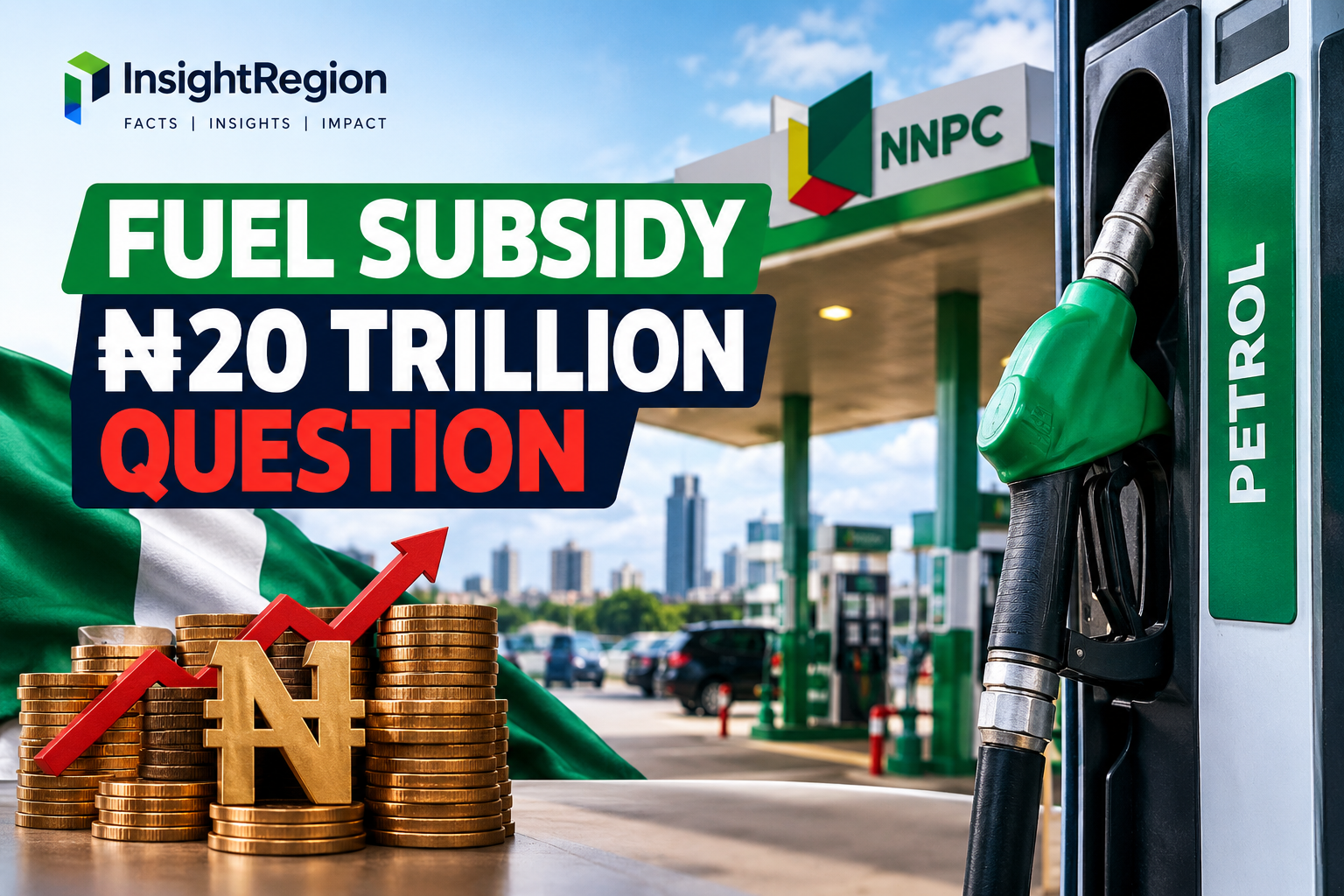
Nigeria’s fuel subsidy debate has returned to the centre of public conversation as the country approaches the 2027 presidential election. What began as a discussion about petrol prices and the hardship caused by subsidy removal has now become a broader argument about government spending, economic reforms, public accountability and the kind of relief Nigerians should expect from their next president.
The latest controversy was reignited by former Vice President and 2027 presidential aspirant Atiku Abubakar, who declared that he would restore petrol subsidy if elected. The promise has drawn criticism from the Federal Government, while supporters of restoration argue that the burden of expensive petrol and its impact on households cannot be ignored.
Against that background, an economist’s reported estimate that restoring fuel subsidy could cost Nigeria ₦20 trillion annually has added another dimension to the debate.
In a policy brief, the director/CEO of the Centre for the Promotion of Private Enterprise (CPPE) Dr. Muda Yusuf, warned that restoring a universal petrol subsidy would cost Nigeria an estimated N20 trillion annually and reverse the gains of deregulation, despide acknowledging the severe pressure Nigerians and businesses are facing from rising petrol prices.
Dr. Yusuf said, “the solution is not to return to the old subsidy regime. Instead, government should preserve the gains of deregulation while using the fiscal savings to deliver mass transit, power, food security and targeted social protection.”
The figure, reported by Leadership Newspaper, raises a question that deserves more than political arguments: If Nigeria restores petrol subsidy, how much would it cost, who would pay for it, and would the benefits justify the financial commitment?
These questions matter because the disagreement is not simply about whether petrol should be cheaper. It is about how the government should use public money, how Nigerians should receive economic relief, and whether a subsidy arrangement can be designed to protect consumers without creating another major burden on the public purse.
The ₦20 Trillion Question: What Would Nigeria Be Paying For?
The reported ₦20 trillion annual estimate is a useful starting point, but it should not be treated as a confirmed government expenditure forecast without understanding how it was calculated.
A fuel subsidy generally involves government covering part of the cost of supplying petrol so that consumers pay less at the pump than they otherwise would. The amount required depends on several factors, including the price of crude oil, refining and distribution costs, the exchange rate, the volume of petrol sold and the difference between the market-related supply cost and the regulated consumer price.
In simple terms, the larger the gap between the actual cost of supplying petrol and the price consumers pay, the more money government may have to provide.
For example, if the cost of supplying a litre of petrol were ₦1,300 and the government wanted consumers to pay ₦600, the difference would be ₦700 per litre. If 20 billion litres were eligible for subsidy in a year, the arithmetic would produce ₦14 trillion.
That is an illustration, not Nigeria’s verified consumption figure or the economist’s actual calculation. It demonstrates why the assumptions behind the ₦20 trillion estimate are important.
The economist’s exact calculation should be examined before the figure is used as a definitive prediction. How many litres does the estimate assume? What petrol price is being subsidised? Does it include transportation and distribution? Is it based on a universal subsidy or a targeted arrangement?
Without those details, the headline figure tells Nigerians that restoration could be expensive, but not precisely how much the country would spend under a particular policy.
That distinction is important in an election year. A large estimate can attract attention, but a credible subsidy proposal must be accompanied by transparent arithmetic.
Why Nigerians Are Asking for Subsidy Again
The demand for cheaper petrol is understandable when viewed through the daily expenses of ordinary households and businesses.
Petrol is not just a product bought by private motorists. It is an important input in transportation, logistics and many small businesses that rely on fuel-powered generators. Changes in its price can affect how much people spend travelling to work, moving goods, operating businesses and meeting household needs.
When the price of petrol rises, transport operators face higher operating costs. Businesses that depend on fuel may also face increased expenses. These costs can influence the prices of goods and services, although the extent of the effect varies according to the business, location and other economic conditions.
This is why the subsidy question remains emotionally and economically important to many Nigerians.
The removal of petrol subsidy in May 2023 was followed by a sharp increase in fuel prices and higher transportation and living costs. THISDAY reported Atiku’s argument that Nigerians deserve to know how the savings from subsidy removal have been used and whether those savings have translated into improvements in healthcare, education and security.
The question behind that argument is worth examining: If government removes a costly subsidy, what should citizens receive in return?
Shouldn’t the savings be reflected in lower public debt, better roads, improved public transportation, stronger healthcare services, cheaper energy alternatives or direct support for vulnerable households?
The answer cannot simply be that government has saved money. Nigerians need to know how those savings are being used and how the benefits of economic reforms are reaching them.
Why the Government Opposes Returning to the Old System
The Federal Government’s position is that restoring the old petrol subsidy arrangement would undermine economic reforms and recreate a costly system that had become difficult to sustain.
In an August 20, 2026 statement titled Restoring Petrol Subsidies: Atiku’s Volte-Face and Desperation for Power, the State House argued that subsidy removal was part of the petroleum-sector reforms established under the Petroleum Industry Act. The statement also said that restoring the old arrangement would require a clear legal, fiscal and administrative framework.
The government’s argument rests on several concerns.
First, a universal petrol subsidy could become a large recurring expenditure. If the government promises to keep petrol prices below the cost of supplying the product, it must fund the difference.
Second, the old subsidy system was associated with concerns about transparency, fuel importation, under-recovery of costs and public-sector financial obligations. A return to the old model would therefore require more than announcing a lower pump price.
Third, the government argues that Nigeria’s petroleum industry has changed since 2023. Domestic refining capacity has expanded, and the country is seeking to reduce its dependence on imported refined petroleum products.
The State House specifically pointed to the emergence of the Dangote Refinery and the development of local refining as reasons why the subsidy debate should be considered in the context of today’s petroleum market rather than the conditions that existed before 2023.
These are government arguments, not proof that every subsidy arrangement would produce the same results. A targeted and transparent subsidy would need to be assessed separately from the old system.
The Other Side: Is Cheaper Petrol Worth the Cost?
The strongest argument for restoration is that petrol prices affect the wider economy.
A subsidy could reduce the price consumers pay at the pump, potentially easing some transport and business costs. For households already facing financial pressure, that relief could be meaningful.
Supporters of restoration may also argue that the government has a responsibility to protect citizens from sudden increases in essential energy costs, especially when those increases affect transportation and the prices of goods.
This argument deserves serious attention.
However, the economic question is not simply whether cheaper petrol would help Nigerians. It is whether the cost of providing that relief is justified by the benefits, and whether the subsidy would reach the people who need it most.
A universal subsidy provides support to everyone who buys the subsidised product, regardless of income. That includes households with different levels of purchasing power and businesses with different fuel consumption patterns.
A targeted subsidy could take a different approach by limiting assistance to defined beneficiaries, quantities or production arrangements.
The distinction matters because the design of a subsidy can influence who benefits, how much government spends and how easily the programme can be monitored.
Universal Subsidy or Targeted Support?
The phrase “bring back fuel subsidy” can mean different things.
It may refer to a return to the old system in which petrol prices were kept below the cost of supply through government intervention.
It may also refer to a new arrangement in which government supports selected consumers, domestic producers or specific quantities of petrol.
Atiku’s reported proposal has been described in coverage of the debate as a targeted, capped and transparently budgeted production subsidy. TheCable and other reports have also covered the government’s opposition to restoration.
A targeted arrangement could potentially address some weaknesses of a universal subsidy, but it would still require answers to important questions.
How would eligible beneficiaries be identified? Would government support domestic refining, petrol distribution or direct consumer purchases? What would the subsidy limit be? How would payments be verified? What would happen if crude oil prices or the naira exchange rate changed?
A subsidy is not automatically efficient simply because it is called targeted. The details of implementation determine whether the programme is affordable, transparent and effective.
The real issue is whether government can demonstrate that the arrangement would provide measurable public benefits at a cost the country can sustain.
The Dangote Refinery Question
Nigeria’s expanding domestic refining capacity adds another layer to the debate.
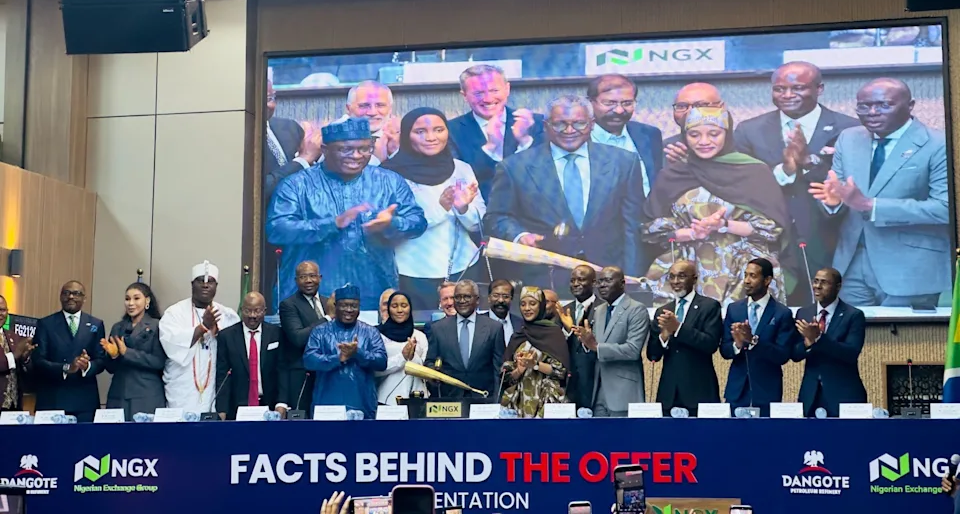
The Dangote Refinery has become an important part of the country’s petroleum-sector transition. Reuters reported in September 2026 that the refinery processes 700,000 barrels of crude per day and has plans to increase capacity to 1.4 million barrels per day by 2029.
The significance for subsidy policy is that Nigeria’s fuel market is no longer being discussed only in terms of imported petrol and government payments to cover price differences.
Domestic refining creates the possibility of greater local supply, reduced exposure to international refined-product markets and stronger industrial activity. But it does not automatically guarantee cheap petrol. Refining costs, crude oil supply, transportation, exchange rates and competition still matter.
A future subsidy policy should therefore explain how it would affect domestic producers.
Would the subsidy apply to locally refined petrol? Would imported products receive the same support? Would a production subsidy encourage more refining investment? Could a universal price subsidy create distortions between producers?
These are important questions because Nigeria should be seeking an energy system that is both affordable for consumers and capable of supporting sustainable domestic production.
The Cost of Subsidy and the Cost of Removing It
The debate often presents two competing pictures. One side highlights the financial burden of subsidy and the need to redirect public money towards other priorities.
The other highlights the hardship that can follow when petrol prices rise and argues that the benefits of subsidy removal should be visible in citizens’ lives.
Both concerns are legitimate economic questions.
A subsidy can impose a significant cost on public finances. But removing a subsidy can also impose costs on households and businesses, especially when alternative transport and energy options are limited.
This means the debate should not be reduced to “subsidy is wasteful” or “subsidy is good for Nigerians.” The more useful question is how government can provide relief while managing the country’s finances responsibly.
For example, if government chooses to spend a large amount on petrol subsidy, citizens should be able to compare that commitment with the funding available for public transportation, healthcare, education, roads and other services.
If government chooses not to restore subsidy, it should explain how it intends to reduce the burden of high energy costs on households and businesses.
The public interest requires both sides to answer these questions.
What Should Nigerians Ask Before the 2027 Election?
The fuel subsidy debate is likely to remain an important issue as the 2027 presidential election approaches. But campaign promises should be assessed through clear policy details rather than slogans.
Any candidate proposing to restore subsidy should explain:
- The expected annual cost of the programme.
- The source of funding.
- Whether the subsidy would be universal or targeted.
- The petrol price consumers would pay.
- The quantity of petrol eligible for subsidy.
- The arrangements for monitoring and auditing the scheme.
- How the policy would affect domestic refining.
- What would happen if crude oil prices or exchange rates changed.
- How long the programme would last.
- What measurable benefits Nigerians should expect.
Candidates opposing restoration should also explain their alternatives. How will the government reduce transportation costs? What support will vulnerable households receive? How will domestic refining and alternative energy sources help consumers? How will savings from subsidy removal be used and reported?
These questions are more useful than simply asking whether a politician is for or against subsidy.
The ₦20 Trillion Estimate Deserves Scrutiny, Not Slogans
The reported ₦20 trillion annual estimate should encourage Nigerians to ask more questions about the economics of subsidy. It should not, by itself, settle the debate.
The exact cost depends on the design of the programme and the assumptions used to calculate it. A universal subsidy, a capped production subsidy and a targeted consumer-support scheme could have very different fiscal implications.
Similarly, the benefits of subsidy depend on who receives the support and how the policy affects the wider economy. The country therefore needs transparent numbers, clearly defined objectives and independent monitoring.
The government should explain how much it can afford to spend. Supporters of restoration should explain how their proposals would be funded. And both sides should show how their policies would improve the lives of Nigerians.
The Real Issue: Affordable Energy and Value for Money
Nigeria’s fuel subsidy debate is not going away because the underlying problem has not gone away.
Petrol remains an important part of the country’s economic life, and the cost of energy affects households, businesses and transportation.
The question facing Nigerians is not simply whether government should bring back a subsidy. It is whether the country can provide affordable energy without creating a public-finance burden that undermines other important needs.
A restored subsidy may offer relief to consumers, but it must be judged by its actual cost, its transparency and the people it benefits.
The removal of subsidy may improve public finances, but its success must also be measured by whether Nigerians experience better economic opportunities, more affordable alternatives and meaningful improvements in public services.
As the 2027 election approaches, the debate should move beyond political promises. Nigerians deserve clear answers about the cost of cheaper petrol, the use of public money and the policies that can make energy more affordable in the long term.
The most important question is therefore not simply: Should Nigeria bring back fuel subsidy?
It is: What kind of fuel-pricing policy can provide meaningful relief to Nigerians, protect public finances and deliver measurable value for money?
That is the question every political promise on fuel subsidy should be prepared to answer.
Sources and Further Reading
- Leadership — Restoring Fuel Subsidy Would Cost Nigeria ₦20trn Annually — Economist
- THISDAY — Atiku: If Elected President I Will Restore Fuel Subsidy
- State House — Restoring Petrol Subsidies: Atiku’s Volte-Face and Desperation for Power
- Reuters — Billionaire Dangote launches oil refinery ‘people’s IPO’, Africa’s biggest
This article presents the arguments surrounding fuel subsidy restoration and does not endorse any political party, candidate or policy position. The ₦20 trillion figure is attributed to the reported economist’s estimate only.